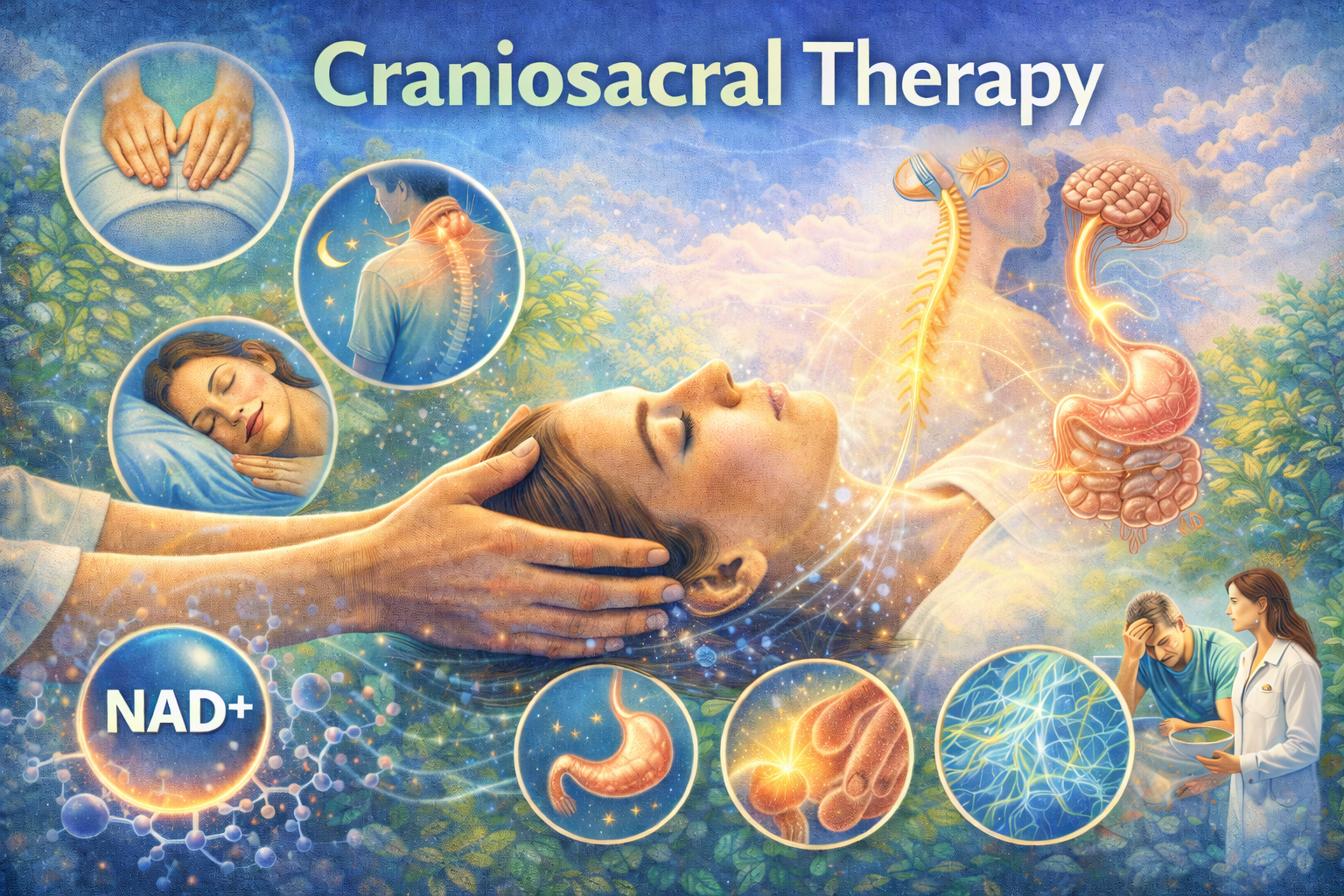
Craniosacral Therapy (CST) can be challenging to describe because it’s best understood through direct experience. Unlike traditional massage—where a practitioner applies firm pressure to encourage muscle relaxation—CST relies on a light touch, typically no greater than the weight of a nickel. This gentleness aims to help the body release tension on its own terms rather than by force.
A Subtle Yet Transformative Approach
Light Touch
CST practitioners typically place their hands on the skull, sacrum, and along the spine to “listen” for areas of tension or restriction. One of the most common questions people have is how such a soft, gentle touch can yield therapeutic benefits. The answer lies, in part, in how we perceive touch: the body has more sensory (feeling) neurons than motor (action) neurons. Because the contact is so subtle, the body doesn’t resist or guard against it. Instead, it responds by “unwinding”—a process where restrictions gently release to restore ease and flow. The light, supportive contact can help the nervous system feel safe, facilitating a deeper release of stress and tension.
Electromagnetic and Sensory Perspectives
The body is an electromagnetic system - with the constant ebb and flow of charged particles through the tissues and blood vessels. The electromagnetic field of the practitioner interacts with the client’s tissues at the ionic level, encouraging smooth and gentle movement.
Nervous System Balance
Central to CST is the idea of stimulating the parasympathetic branch of the autonomic nervous system (often called the “rest and digest” mode). Our busy daily lives frequently activate the sympathetic (“fight-or-flight”) branch, which can create or exacerbate chronic stress patterns in the body. By encouraging parasympathetic dominance, CST invites a state of profound calm, which supports the body’s natural healing processes, including digestion, sleep, and emotional regulation.
Benefits of Craniosacral Therapy
1. Stress Relief
- Relaxation Response
The gentle manipulations of CST aim to calm the autonomic nervous system. This can lead to lower stress levels, reduced anxiety, and improved sleep. Individuals often describe feeling deeply rested after a session, sometimes even drifting off to sleep on the table.
- Pain and Tension Reduction
Chronic aches and pains in the neck, back, or shoulders can be linked to unrelieved stress and tightness. Through CST, the decrease in muscle tension may correspond with an overall sense of relief. While the exact mechanisms can vary from person to person, many report tangible improvements in pain levels.
2. Improved Digestion
- Gut-Brain Connection
The vagus nerve, often referred to as the “wandering nerve,” carries signals between the brain and the digestive organs. When the parasympathetic system is engaged, digestion tends to improve because the body can devote more resources to healthy gut function.
- Overall Relaxation
Moving out of a “fight-or-flight” state and into “rest-and-digest” helps the body focus on essential processes like metabolism. Anecdotal reports suggest that individuals often feel more attuned to their body’s rhythms and experience smoother digestion after CST.
3. Ease and Flow in the Body
- Enhanced Body Awareness
Light touch can heighten proprioception—your awareness of where and how your body is moving in space. This increased sensitivity may help you recognize and release tension patterns you didn’t realize you had.
- Fascial and Connective Tissue Support
Craniosacral therapy addresses restrictions within the fascia (connective tissue). Freeing up these restrictions can lead to more fluid, less rigid movement, improving posture and overall comfort.
What to Expect During a Session
- A Cozy Environment
You’ll lie fully clothed on a massage table, often covered with a blanket for warmth and comfort. Calming music or a quiet atmosphere helps you settle in.
- Gentle Assessment
The CST practitioner places their hands lightly on your head, sacrum, or other areas, feeling for subtle changes in tension or fluid movement.
- Subtle Adjustments
Rather than using force, the practitioner “listens” to the craniosacral rhythm. They may guide or gently encourage tissues to release. These adjustments can be so soft you might not notice them at all.
- Deep Relaxation
Many people become so relaxed that they doze off. Even if you stay awake, you’re likely to experience a calming sensation that lingers well beyond the session.
Experience It for Yourself
We’re currently offering a
deeply discounted initial CST session so you can discover firsthand how this gentle therapy can reduce stress, improve digestion, and promote a sense of overall ease. For even deeper restoration, you can
pair it with Constitutional Hydrotherapy, a complementary treatment that further supports relaxation and healing processes.