V-Cell™ Technology: What Patients Should Know
A concise, evidence-aware guide before the August 6 educational session at Ecore Wellness.
The essential answer: V-Cell™ is the term used by the presenters for an emerging regenerative medicine concept. It should not be assumed to be the same as VSEL research—or to be proven, FDA-approved, or appropriate for an individual patient—without exact product and regulatory documentation.
Why This Conversation Matters
Regenerative medicine is a fast-moving field. New cellular concepts can be scientifically interesting while still requiring careful study, medical screening, and realistic expectations.
On Thursday, August 6, 2026, Ecore Wellness will host Ian Mitchell of A&M Longevity Institute, with special guest Tracy Duhs, host of the Hydrate Podcast, for an educational discussion about V-Cell™ technology and emerging regenerative medicine concepts.
The session is educational. Attendance does not establish candidacy for a procedure or replace an individualized medical evaluation.
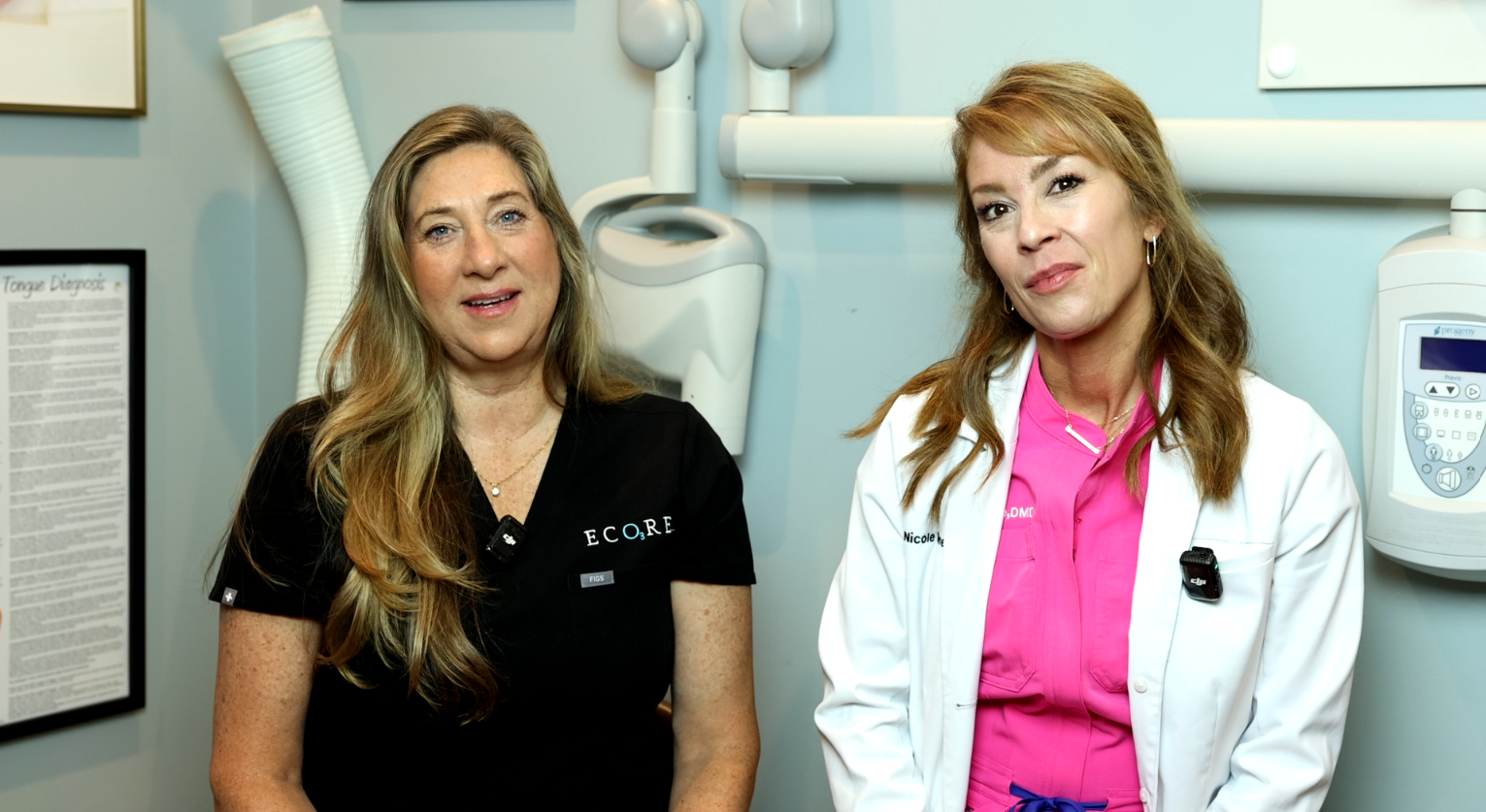
Watch the Educational Conversation
Evelyn Hallford, Ian Mitchell, and Tracy Duhs discuss the presenter-described technology, its proposed concepts, and questions patients may want to ask.
What Does “V-Cell™” Mean?
V-Cell™ is a presenter-used name. The name alone does not identify the exact cells, collection method, processing steps, intended use, or FDA classification.
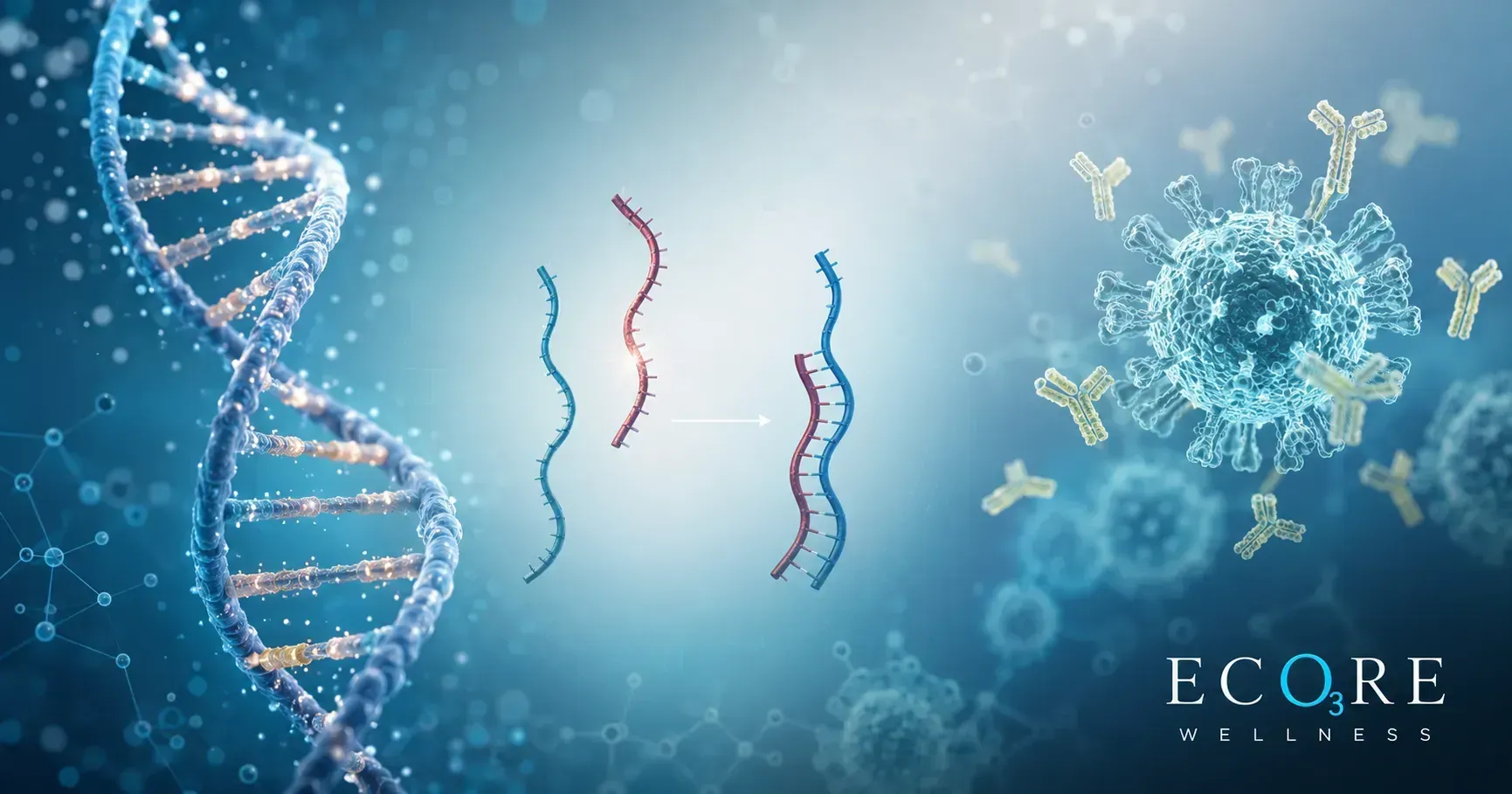
Scientific literature also discusses very small embryonic-like stem cells, called VSELs. VSELs are rare cell populations being studied in laboratories and early clinical research. Definitions and methods vary, and this research does not prove that a commercial V-Cell™ protocol is the same technology or produces a clinical benefit.
Clinical perspective: Biological plausibility is not the same as proven effectiveness. Testimonials and presenter observations can raise useful questions, but they cannot establish typical results.
What the Evidence Can—and Cannot—Show
Early VSEL research has explored cell markers, collection methods, and possible biological roles. A small randomized cardiovascular trial associated with the VSEL field did not show a significant improvement in its primary ischemia outcome and was not large enough to establish effectiveness.
This evidence does not establish that V-Cell™ technology reverses aging, regrows tissue, restores organ systems, improves longevity, or produces guaranteed results.
FDA approval is specific to an exact product and medical use. A study listing, a trademarked name, or the use of a patient’s own cells does not by itself prove FDA approval, safety, or effectiveness.
Why Medical Screening Matters
Even an autologous procedure—one involving a patient’s own cells—may carry risks related to collection, processing, contamination, administration, medications, and underlying health conditions.
A responsible evaluation should review diagnosis, medical history, medications, goals, alternatives, evidence, known and unknown risks, and regulatory status. Experimental procedures should never replace emergency care, oncology care, orthopedic evaluation, or other medically necessary treatment.
Join the Educational Session
Learn more and bring your questions to an in-person discussion at Ecore Wellness.
- Date: Thursday, August 6, 2026
- Location: Ecore Wellness, Encinitas, California
- Presenter: Ian Mitchell, A&M Longevity Institute
- Special guest: Tracy Duhs, host of the Hydrate Podcast
- Topic: V-Cell™ technology and emerging regenerative medicine concepts
Call 858-400-4100 to ask about event availability. Calling does not guarantee a seat.
Frequently Asked Questions
Is V-Cell™ FDA-approved?
This article does not state that it is. Request the exact product or procedure name, FDA classification, investigational status, and supporting documents.
Is it proven to reverse aging?
No. Age-reversal and tissue-regrowth outcomes have not been established for the presenter-described concept.
Is the session a consultation?
No. It is an educational event and does not establish medical candidacy or a clinician-patient relationship.
What should patients ask?
Ask about the exact cell type, collection and processing, clinical evidence, risks, alternatives, FDA status, and informed-consent process.
Start With a Free Discovery Call
Speak with the Ecore Wellness team for general information about the clinic, the educational event, and appropriate next steps. A discovery call is not a medical consultation and does not determine candidacy.
Book Your Free Discovery Call →